Home › The Journal › Buyer's Guide
The Journal · Buyer's Guide
How Much Do Private Swimming Lessons Cost? What Drives the Price
Ask five providers what private swimming lessons cost and you will get five different answers, often with very different things included. The price only makes sense once you know what you are actually paying for. Here is what moves it up or down, and how to tell whether a lesson is good value.
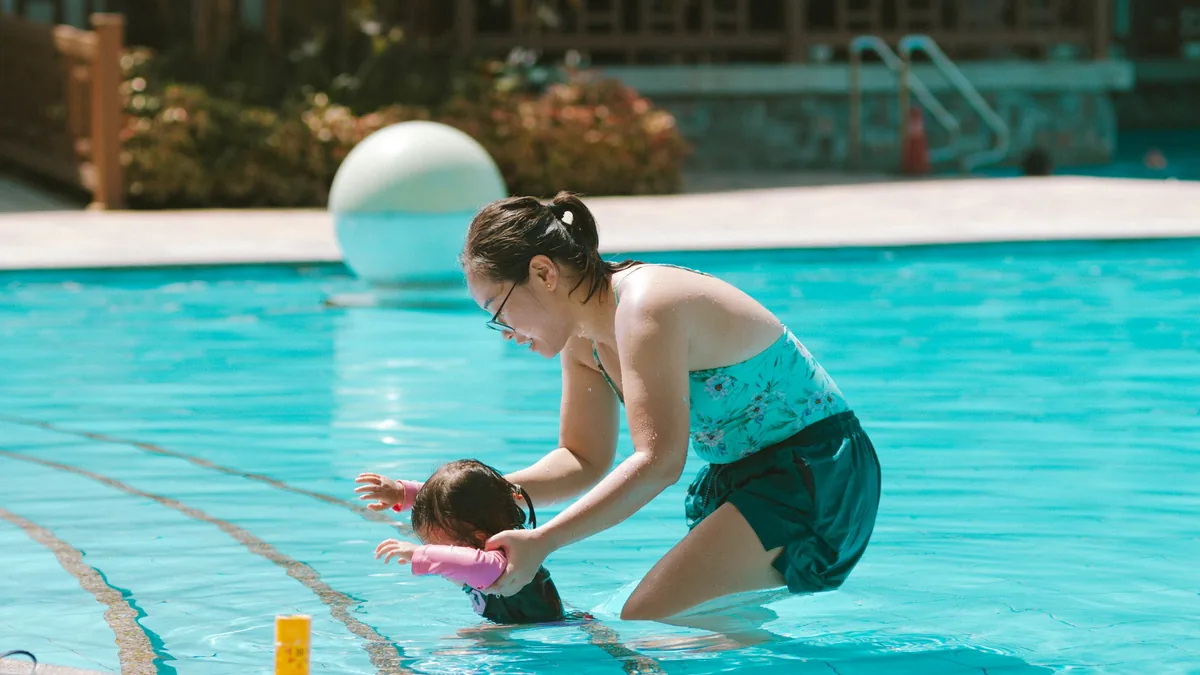
We are a private coaching company, so it would be easy to wave this question away. We won't. But we also don't publish a price list, here or anywhere else on the site, because a single figure would be misleading. Two families can ask for "private swimming lessons" and want completely different things: a nervous four-year-old in the family pool on a Saturday morning, or two adults training for a triathlon at 7am before work.
What we can do is explain the factors that genuinely change the cost, so you can compare quotes properly and spot when a cheap lesson is not as cheap as it looks.
The short answer
The cost of private swimming lessons comes down to six things:
- The format: one swimmer, two, or a small group sharing the coach.
- The pool: your own pool at home, or a pool that has to be found and paid for.
- The coach: qualifications, checks, insurance and experience with your kind of swimmer.
- Travel and timing: where you are, and when you want the lessons.
- Lesson length and frequency: 30, 45 or 60 minutes, weekly or as a short intensive block.
- What is included: planning, progress tracking, cover if the coach is ill, and one point of contact.
Each of these is worth a closer look.
1:1, 2:1 or small group
The format is usually the biggest single factor in what each person pays.
One-to-one means the coach is watching one swimmer for the whole lesson. Every attempt is corrected as it happens, and there is no waiting at the wall. It is the most focused format and, per swimmer, the most expensive. It tends to earn its place for a frightened beginner, a swimmer stuck on one skill, or anyone with a deadline.
Two-to-one shares the coach between two people, typically siblings close in age and ability, or a parent learning alongside a child. The total cost of the session is often similar to a one-to-one, but it is split two ways, so each swimmer pays less. It works well when the two are at a similar level. If one races ahead, a good coach will tell you and suggest splitting them.
A small group of three or four swimmers of a similar standard brings the cost per person down further, and keeps some of the energy that motivates children in a class, without the noise and waiting of a busy public pool.
At SwimFitz we coach all three, and families often move between them. A child might start one-to-one to get past a fear of water, then join a sibling once they are confident. We compare the formats in more detail in our honest guide to private vs group swimming lessons.
Your own pool, or a pool that has to be hired
Where the lesson happens changes the cost more than most people expect.
If you have your own pool, there is no pool hire to pay for. The coach comes to you, the swimmer learns in the water they will actually use, and the lesson starts when the coach arrives rather than after a drive, a changing room and a queue. For families with a home pool, this is usually the simplest and best-value set-up.
If you don't have a pool, someone has to provide one, and pool time is a real cost. Public pools rarely let outside coaches teach in their water, so private lessons without a home pool usually mean a privately hired pool, which is built into the price either directly or indirectly. Ask any provider where the lesson will actually take place and whether the pool cost is included in the figure they quote.
Pool preparation counts too
Water temperature makes a real difference to how much a lesson achieves. As a general guide, we recommend a minimum of 28°C for most ages and 30 to 32°C for babies. A cold pool shortens the useful part of a lesson, especially for young children, so a quote that looks good on paper is worth less if half the session is spent shivering on the steps. If your pool is usually kept cooler, it is worth factoring in the heating time and cost before lessons start. Our guide to keeping children warm in outdoor pools has practical tips.
The coach: qualifications, checks and insurance
This is the part of the price you cannot see, and the part that matters most when someone is working with your family in your home.
A properly set-up private swimming coach carries real costs that a casual arrangement may not:
- Recognised teaching qualifications, such as Swim England or STA, kept up to date.
- An enhanced DBS check, essential for anyone teaching children.
- Current first-aid and safeguarding training.
- Professional insurance, so that you are not exposed if something goes wrong in your pool.
- Relevant experience: teaching babies, nervous adults, children with additional needs and improving triathletes are different skills.
A cheaper quote sometimes reflects a teacher who is not carrying some of these. That may be fine for a one-off, but it is worth asking directly. Every SwimFitz coach is checked for teaching qualifications, an enhanced DBS check, first aid, safeguarding and insurance before they visit a family. We explain why that matters in why families choose SwimFitz over marketplace sites.
Travel and timing
A home-visit coach travels to you, and that time is part of the cost of the lesson whether it is itemised or not. A pool in a busy part of London, a rural estate an hour from the nearest coach, and a house where a coach can teach three lessons back to back will all price differently.
Timing matters too. Early mornings, after-school slots and weekends are the most requested times, and a coach's diary fills there first. Flexibility on time or day can make it easier to place a coach near you. We coach seven days a week, from 07:00 to 20:00, across London, the Home Counties and beyond, so most families can find a slot that suits.
Lesson length and how often you swim
Longer lessons cost more per session, but longer is not always better:
- Babies and children aged 3 to 5 usually get the most from around 30 minutes. Beyond that, concentration and body heat tend to run out.
- Children aged 6 and above generally do well with 45 minutes.
- Older children, teenagers and adults can make good use of 45 to 60 minutes.
Frequency matters as much as length. Weekly lessons build steadily over a term. A short intensive block, several sessions close together, often moves a swimmer further than the same number of lessons spread over months, because nothing is forgotten between sessions. That is why we run swimming crash courses before holidays, before a school assessment, or before the summer in a home pool.
Block booking
Many providers, us included, plan lessons in blocks rather than one at a time. That isn't just a booking convenience. A block lets the coach plan a progression, keeps the same coach and the same slot, and gives the swimmer a rhythm. When comparing quotes, check whether you are being offered a planned block or a run of separate lessons with no plan behind them.
How to judge value, not just price
The cheapest lesson is the one that gets your swimmer where they need to be in the fewest sessions. A useful way to compare is to think about progress per lesson rather than price per lesson.
Questions to ask any provider
- Who exactly will be teaching, and what are their qualifications?
- Do they hold an enhanced DBS check, first aid and their own insurance?
- How long is each lesson, and how much of it is actually in the water?
- Is the pool cost included, and where will the lessons take place?
- Is there a plan for the block, and how will progress be tracked and shared with you?
- What happens if the coach is ill or away: is there cover, or is the lesson cancelled?
- Can the format change, for example adding a sibling or moving to 2:1 later?
- What is the cancellation policy, and how much notice do you need to give?
A few signs that a lesson is good value, whatever it costs:
- The swimmer is in the water working, not waiting. In a private lesson, nearly all of the session should be active.
- Each lesson builds on the last. The coach remembers what happened last week and knows the next small step.
- You can see progress. Not necessarily a new badge every week, but clear movement: face in, then floating, then a few strokes, then a width.
- Problems get fixed, not worked around. A fear of deep water or a breathing habit is addressed directly rather than avoided for a term.
And a few signs it may not be:
- The lesson regularly starts late or finishes early.
- There is no sense of a plan beyond "turn up and swim".
- The same skill has been "nearly there" for months with no change of approach.
- Nobody can tell you who is coming next week.
Children, adults and specific goals
What you are trying to achieve also shapes the right format, length and number of lessons, and so the overall cost:
- Young children learning to swim often do best with short, regular one-to-one or 2:1 lessons in a warm pool. Our children's swimming lessons page explains how we work at each stage.
- Adults learning from scratch, or returning to swimming, often want a discreet one-to-one setting where nobody is watching. See adult swimming lessons.
- Nervous swimmers of any age usually progress faster one-to-one at first, at their own pace. Our fear of water lessons cover this in more detail.
- Swimmers with a deadline may be best served by an intensive block rather than open-ended weekly lessons.
The bottom line
There is no single answer to "how much do private swimming lessons cost", and anyone who gives you one without asking questions first is guessing. The price depends on how many people share the coach, where the pool is, who the coach is and what checks they carry, how far they travel, and how long and how often you swim.
The better question is what you will get for it. A well-qualified, properly insured coach in a warm pool, working to a clear plan, will usually get a swimmer further in fewer lessons, and that is where the real value sits.
If you would like a figure for your own situation, the quickest route is to tell us a little about who is swimming, where and when. We will come back to you directly with a tailored quote and the options that make sense for your family, whether that is 1:1, 2:1 or a small group.
Frequently asked questions
How much do private swimming lessons cost?
It depends on the format (1:1, 2:1 or a small group), whether you have your own pool, the coach's qualifications and checks, travel, and the length and number of lessons. Because these vary so much between families, SwimFitz gives each family a tailored quote rather than publishing a single figure. Send us your details through the booking page and we will come back to you with options.
Are private swimming lessons cheaper for two children together?
Usually, per child. A 2:1 lesson shares the coach between two swimmers, so the session cost is split, which often makes it better value for siblings close in age and ability. If one child is much further ahead, separate lessons or a different mix may work better, and a good coach will tell you.
Is it cheaper to have lessons in my own pool?
Generally, yes. With your own pool there is no pool hire to pay for, and the coach comes to you. Without a home pool, a private pool has to be found and paid for, and that cost is built into the lesson. Keeping your pool at a comfortable temperature, around 28°C for most ages and 30 to 32°C for babies, also helps every lesson count.
How many private swimming lessons will my child need?
There is no fixed number. It depends on the starting point, confidence, age and how often lessons happen. Nervous beginners need more time at the start, while a confident swimmer working on one skill may need only a short block. A short intensive block often moves things faster than the same number of weekly lessons spread out.
What should be included in the price of a private swimming lesson?
At minimum, a qualified coach with an enhanced DBS check, first aid and professional insurance, a lesson plan that builds week to week, and clear communication about progress. It is also worth asking about cover if the coach is ill and the cancellation policy before you book.
More from The Journal
One-to-One vs Group Swimming Lessons: An Honest Comparison
Practical, expert guidance from the SwimFitz Journal.

Why Families Choose SwimFitz Over Marketplace Sites
Practical, expert guidance from the SwimFitz Journal.

The PA's Guide to Managing Private Swim Programmes for UHNW Households
Practical, expert guidance from the SwimFitz Journal.
Want a tailored quote?
Tell us who is swimming, where your pool is and when suits. We will come back with options for 1:1, 2:1 or a small group, across London, the Home Counties & beyond.
Request a Quote → Children's Lessons