Home › The Journal › Children
The Journal · Children
Keeping Children Warm — Swimming Lessons in an Unheated Outdoor Pool
Plenty of Britain’s garden pools are unheated — and even the heated ones feel brisk on a breezy morning. Cooler water need not stop a child’s lessons. Here is how to read the conditions, the kit that genuinely helps — wetsuit, swim hat and the rest — and the routine that warms them up afterwards.
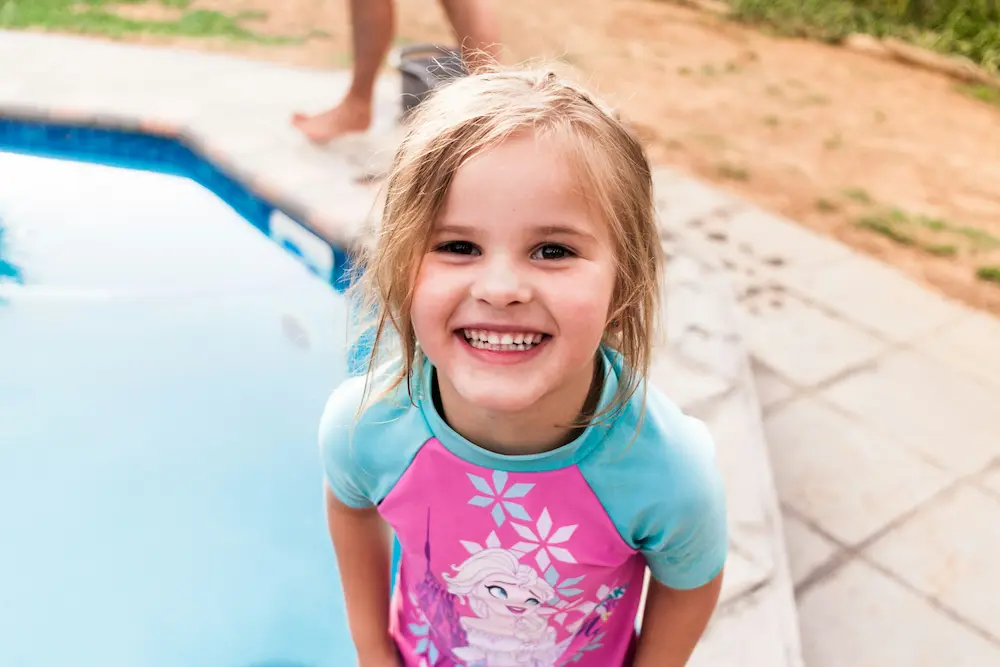
An unheated outdoor pool in Britain is an honest one. Even in high summer the water rarely climbs far past the low twenties, the air changes its mind by the hour, and a breeze that means nothing on the terrace feels very different to a wet-skinned seven-year-old standing chest-deep at the shallow end. Parents look at all this and wonder whether lessons should simply wait for warmer weather.
They rarely need to. With the right kit, the right length of session and a coach who runs the lesson for the conditions, children learn happily in water that would make most adults hesitate at the steps. The whole art comes down to one idea: manage the child’s heat, and the cold looks after itself. This guide covers how — what the water actually does, what to buy, and what a well-run cold-water lesson looks like from the poolside.
1. Why children feel the cold faster than you do
A child is not a small adult in the water. Children carry more skin for every kilogram of body weight and less insulation beneath it, so they shed heat far faster than the adult standing beside them — which is why a parent can feel perfectly comfortable while their child is quietly running out of warmth. Very cold water also triggers a gasp reflex on entry, which is one reason entries into a cool pool are always managed calmly rather than jumped.
The other difference is that children do not report the cold. A child having fun will keep going long past the point an adult would call it, and the signs arrive in their behaviour before their words: shivering that does not stop when they move, lips turning blue-ish, fingers gone clumsy on the pool edge, a chatty child suddenly quiet. Every adult at an outdoor lesson should know that short list, because the child will not volunteer it.
One firm boundary before anything else: unheated outdoor water is not for babies and toddlers. Baby swimming needs genuinely warm water, comfortably above thirty degrees, and no amount of neoprene changes that. This guide is for school-age children onwards.
2. Reading the day — water, air and wind
The pool thermometer tells only half the story. As a working rule: above about 21°C most children manage a normal, busy lesson in an ordinary swimsuit. Between roughly 17 and 20°C — where many unheated British pools sit for much of the summer — a wetsuit and a slightly shorter session keep the lesson comfortable. Below about 16°C, sessions become very short, wetsuited and for confident older children only, and it is usually better to move the lesson indoors until the water comes back up.
The half the thermometer misses is the air — and above all the wind. Most of a child’s heat is lost not swimming but standing still in a breeze with wet skin, between exercises or waiting at the wall. A still, sunny eighteen-degree morning swims far warmer than a windy twenty-two-degree afternoon. If the pool has a sheltered corner, that is where the lesson lives on a breezy day; if it has none, the lesson gets shorter and busier to match.
Keep a floating thermometer in the pool and read it at lesson time, not at midday. An unheated pool can swing several degrees between a cold night and a warm afternoon, and the number that matters is the one at nine o’clock when the lesson starts.
3. The kit that actually keeps them warm
One piece of kit changes everything: a proper children’s wetsuit. A snug, full-length suit of 2–3mm neoprene roughly doubles how long a child can work happily in cool water, and it adds a little buoyancy that most learners quietly enjoy. The catch is fit. A wetsuit works by trapping a thin layer of water against the skin and letting the body warm it; a loose suit pumps cold water through instead and does almost nothing. Check the neck, lower back and thighs for gaping, and have the child wear it in the bath or a warm pool once before its first cold outing — zips and tight cuffs are better met without an audience.
Second on the list is the humble swim hat. A silicone hat holds warmth in, keeps wet hair off the face, and makes a visibly bright target of a small head in open water — a habit worth building early. On colder days, two silicone hats layered, or a single neoprene hat, make a real difference. Round out the bag with a rash vest to layer under the wetsuit on cool mornings, neoprene swim socks once the water drops below about eighteen degrees, and — the piece parents forget — a changing robe waiting at the pool edge, not folded neatly indoors.
The unheated-pool kit bag
- Full-length 2–3mm children’s wetsuit, snug everywhere — no gaping at the neck or lower back
- Silicone swim hat, plus a second hat or a neoprene one for colder days
- Rash vest to layer underneath on cool mornings
- Neoprene swim socks once the water is below about 18°C
- Changing robe or two large towels waiting at the pool edge, not indoors
- Warm drink and a snack ready for the moment they get out
- Dry hat and warm layers for afterwards — the ten minutes after the swim lose the most heat
4. How a coach runs a cold-water lesson
A lesson in cool water is not the indoor lesson with chattering teeth. It is shorter and much busier: twenty to thirty minutes rather than three-quarters of an hour, with the drills reordered so the legs are kicking almost throughout. Nothing in the plan asks a child to stand chest-deep going nowhere — explanations happen in seconds at the wall, demonstrations while the child is moving, and the games that would have them waiting in a queue stay indoors where they belong.
Entries are walked and managed, never a shivering hover on the steps while courage gathers. And the coach watches the child, not the clock: persistent shivering, blue-tinged lips or fumbling hands end the lesson early and cheerfully, every time. A child who leaves the water warm and pleased with themselves asks when the next lesson is; a child pushed ten minutes too far remembers the cold for a season. This is where one-to-one lessons at your own pool earn their keep — there is no group timetable to serve, so the session flexes to the day and to the child in it.
A cold pool is not a reason to cancel the lesson — it is a reason to run it differently.
5. The ten minutes after the swim
More warmth is lost on the poolside than in the pool. The moment the lesson ends, the routine begins: robe or towels on immediately, wet kit peeled off underneath, dried from the head down, then dry layers, a dry hat and something warm to drink with a snack beside it — a cold swim burns through a child’s fuel remarkably fast. Keep them gently moving while they warm; standing still in wet air undoes the good work.
Shivering that eases over ten or fifteen minutes is a body doing its job. A child still shivering beyond that, or one gone drowsy and pale, comes indoors and warms gradually — layers, warmth and company, and a warm shower rather than a hot one, which feels harsh on cold skin and rushes the job. Handled well, the after-swim routine becomes as automatic as the lesson itself, and children take genuine pride in running it themselves.
6. Cold water is a feature, not a fault
There is a quiet advantage hidden in all of this. A child who learns in real conditions — cool water, a breeze, a lesson that adapts — becomes a different kind of swimmer from one who has only ever known a warm indoor pool. The sea on holiday holds no surprises. Open water later, whether for fun or for sport, is a smaller step. British swimming was built in lidos and rivers long before heated pools existed, and a little of that hardiness is worth passing on deliberately.
It also means the family pool earns its keep for more of the year. A summer crash course in an unheated garden pool works beautifully with the approach above, and the habits in our guide to teaching a child to swim at home carry over unchanged — only the kit bag grows.
None of this is complicated. Read the water and the wind, dress the child properly, keep the lesson short and busy, and treat the ten minutes afterwards as part of the session. Do that, and an unheated pool stops being an obstacle and becomes what it quietly is — one of the best training grounds a young swimmer can have.
Frequently asked questions
What water temperature is too cold for a child’s swimming lesson?
Above about 21°C most children manage a normal, busy lesson in an ordinary swimsuit. Between roughly 17 and 20°C a well-fitting wetsuit and a shorter session keep it comfortable. Below about 16°C, keep sessions very short and wetsuited for confident older children only — or move the lesson to an indoor pool until the water comes back up.
Should my child wear a wetsuit for outdoor swimming lessons?
In an unheated British pool, almost always yes. A snug full-length 2–3mm children’s wetsuit makes the single biggest difference to how long a child can learn happily. Fit matters more than thickness — a loose suit pumps cold water through and does very little, so check there is no gaping at the neck or lower back.
How long should a lesson be in an unheated pool?
Twenty to thirty busy minutes rather than a full three-quarters of an hour. The coach keeps the child moving throughout and ends early — cheerfully — at the first sign of persistent shivering, blue-tinged lips or clumsy hands. Two shorter swims in a week beat one long, cold one.
How do I warm my child up after a cold swim?
Robe or towels on the moment they are out, wet kit off underneath, then dry layers, a dry hat, a warm drink and a snack, and keep them gently moving. Shivering that eases over ten to fifteen minutes is normal — a child still shivering after that, or drowsy and pale, should be warmed indoors gradually. Speak to us about lessons run for the conditions at your own pool.
More from The Journal
Teaching a Child to Swim at Home: What Actually Works
The order that works, age-by-age milestones and a parent’s checklist.
Private Pool Safety: A Complete Guide for Families
The layered safeguards every household with water should have in place.

Coaching on Holiday: Lessons at the Villa or Yacht
How a trusted private coach travels with the family — villa, chalet or yacht.
Lessons at your own pool, whatever the weather
Private, one-to-one coaching for children at home across London & the Home Counties — run for the conditions, from first splash to confident swimmer.
Request a Lesson → Explore Lessons