Home › The Journal › Seasonal
The Journal · Seasonal
Closing the Outdoor Pool — Or Not: Swimming Through a British Autumn
Sometime in the next few weeks the cover goes on and the outdoor pool is finished for the year. For a household with a child mid-way through learning to swim, that decision quietly sets the next eight months. It is worth making deliberately rather than by default.
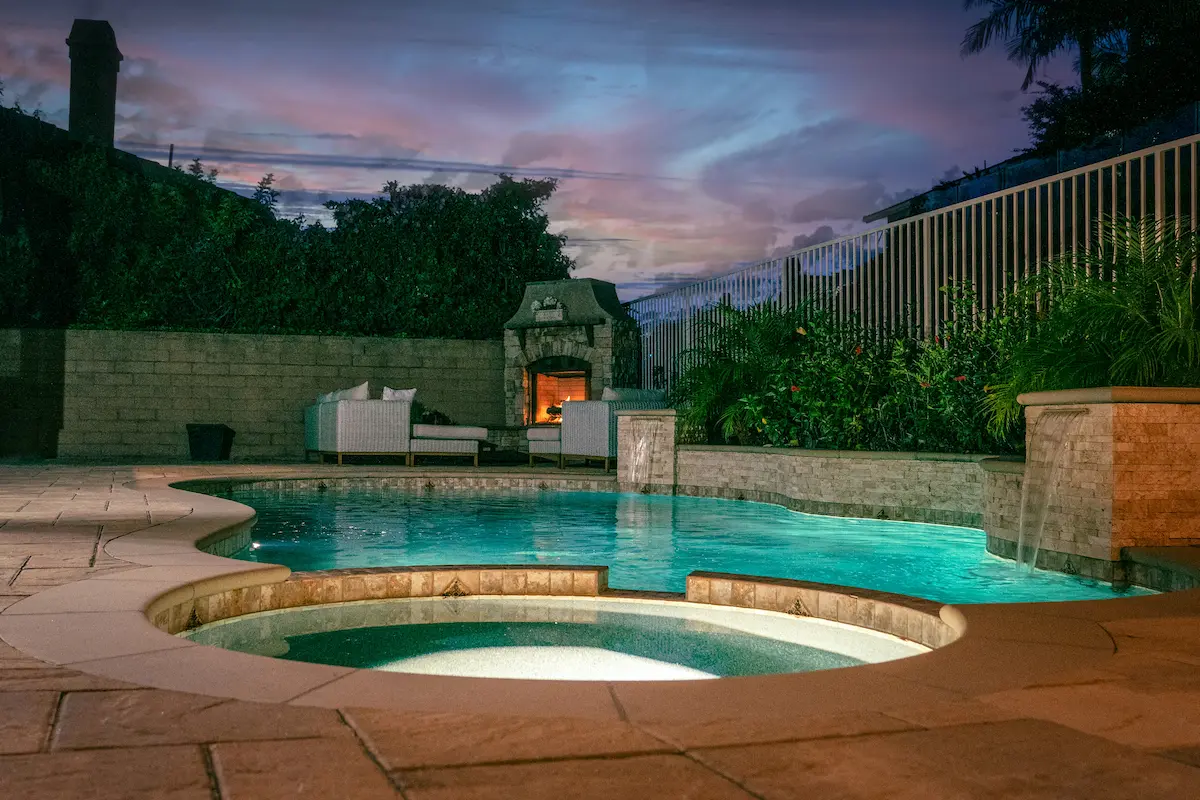
There is a week in late September, usually after the first genuinely cold morning, when the decision gets made. The cover goes on, the heat pump is switched off, the pool house is drained down, and the outdoor pool is finished until May. In most households nobody discusses it. It simply happens, the way the garden furniture goes into the shed.
For an adult who swims for pleasure, that is a small loss. For a child part-way through learning to swim, it is not. Closing the pool in September and reopening it in May is an eight-month gap, and a young child does not resume where they left off. They resume some way behind it.
So the end-of-season decision is worth treating as a coaching decision as much as a plant-room one. Here is what actually happens to the water between now and November, what a cover and a heat pump genuinely buy you, and what to do when extending the season is not sensible.
What happens to the water between September and November
An unheated outdoor pool in southern England peaks somewhere in the low twenties in a good August. By the middle of September it has typically fallen back into the high teens. By mid-October it is usually somewhere in the low to mid teens, and by November it is heading into single figures. The fall is not steady, either — it accelerates once the nights lengthen, because the pool loses most of its heat overnight and gets fewer daylight hours to recover it.
Set that against what a lesson actually requires. Swim England recommends water of 29 to 31°C for children's swimming lessons, and warmer still for babies. That figure is not fussiness. A child who is cold stops learning: they tense up, their breathing shortens, and the session becomes about survival rather than skill. We wrote about the practical end of this in keeping children warm in an unheated outdoor pool, and the honest summary is that below about 26°C a young child's useful lesson time collapses to a fraction of the hour you have paid for.
Which means the real question is not "can we still swim in October?" It is "can we hold the water somewhere a child can still learn in?" — and that is a question with an actual answer.
Covers: the single biggest lever, and the three types
If you do one thing, cover the pool. Evaporation is the dominant route by which an outdoor pool loses heat — the figures quoted across the industry range from around 70 per cent to as high as 90 per cent of total heat loss — and a cover is simply a vapour barrier placed in its way. Covering a pool when it is not in use is consistently described as the single most effective way to cut heating costs, with savings commonly put at 50 to 70 per cent.
The three types are not interchangeable.
Bubble or solar covers are the cheapest and, thermally, surprisingly effective. They float directly on the surface, stop evaporation almost completely, and let some solar gain through. Their drawback is handling: on anything larger than a modest pool they are awkward, unattractive, and in practice they stop being used by October because nobody wants to wrestle one in the dark.
Slatted automatic covers are what most well-specified private pools have. They roll on and off in under a minute, which is the whole point — a cover that takes ninety seconds gets used twice a day, and a cover that takes fifteen minutes gets used in July. They also carry a safety benefit, which matters if there are young children in the house.
Insulated deck-level or track covers retain the most heat and cost the most. They earn their keep on a pool that is genuinely being run into the shoulder season, and are over-specified for one that closes in September regardless.
A cover that takes ninety seconds gets used twice a day. A cover that takes fifteen minutes gets used in July.
Heat pumps in the shoulder season — what is realistic
An air-source heat pump is the standard way to extend an outdoor season in this country, and it is worth being clear about what it does and does not do.
It works by extracting heat from the outside air, which means its efficiency falls as the air cools. The commonly quoted working threshold is around 6°C of outside air — above that a pool heat pump performs well, and below it output drops sharply. It is also slow. From cold it will typically take one to three days to bring a pool up to temperature, which makes it an instrument for holding a temperature rather than producing one on demand.
Put plainly: a heat pump and a cover together will reliably buy you September and most of October, and will usually stretch to a mild early November. A heat pump without a cover spends the whole of October fighting evaporation and produces an eye-watering bill for the privilege. Neither combination will run a British outdoor pool at 30°C in January, and any quotation suggesting otherwise deserves a second opinion.
That is the genuine trade. Six to eight additional weeks of usable water, at a running cost that is real but not absurd when the cover is doing its job — set against closing on the first cold morning and losing the autumn entirely.
The eight-month gap, and what it costs a child
This is the part that rarely enters the conversation, because it is a coaching cost rather than a plant cost.
Swimming is not like riding a bicycle for a young child, because water confidence is not purely a motor skill. It is a relationship with an environment, and in a four- or five-year-old that relationship is fragile and recently built. Take a child who has spent the summer getting to the point of putting their face in, floating unaided and pushing off the wall, then remove the water entirely for eight months, and a meaningful amount of that unwinds. Not the mechanics — the willingness.
In practice, families who stop in September and restart in May routinely spend the first four or five sessions of the new season recovering ground rather than gaining it. A summer's progress, re-bought. Do that two years running and a child who should be swimming competently at seven is still working on confidence at nine.
The older the child, the less this matters. A ten-year-old who can already swim will lose fitness and a little feel and be fine. It is the three-to-six band, and any child who is genuinely still learning rather than practising, where the winter gap does real damage.
When extending is not the right answer
Sometimes the sensible decision is simply to close the pool, and it is worth saying so plainly. An older pool with no cover, a marginal heat source and a long dark garden is not worth heating into November; the running cost is high, the water is never quite right, and the sessions are poor. If that is your situation, close it properly and move the swimming indoors rather than persevering with cold water and disappointing lessons.
The two things that work are moving the lessons to warm indoor water for the winter, and — if the household already has an indoor pool that is under-used — simply relocating there. Our coaches work in clients' own pools and in a network of private indoor pools across London and the Home Counties; home pool rental covers how that arrangement works, and the children's lessons page sets out what a winter block usually looks like.
What matters far more than where is that the water is warm and the rhythm does not break. A fortnightly winter lesson in a warm indoor pool preserves more than a weekly one in cold water, and vastly more than nothing at all until May.
End-of-season checklist
- Decide the closing date deliberately, not on the first cold morning.
- Cover the pool whenever it is not in use — it is the single largest saving available.
- If you are extending, run the heat pump with the cover, never without it.
- Set a realistic end point: late October for most pools, early November for a well-covered one.
- Book winter indoor lessons before you close, not in January when the gap has already opened.
- For children under six, protect the rhythm above all else — frequency matters more than duration.
- Use the closed months for the plant work you keep deferring, so May starts warm rather than late.
The outdoor season in this country is short, and there is no shame in ending it. What is worth avoiding is ending it by accident — putting the cover on in the third week of September, and discovering the following May that a child who could nearly swim last summer can no longer quite face the deep end. Decide the date, extend it if the pool and the cover make that sensible, and make sure something warm and indoors is already in the diary before the water goes cold.
Frequently asked questions
How late in the year can you realistically swim in a British outdoor pool?
With a good cover and an air-source heat pump, most well-specified private pools in the south of England can hold usable water through October and into a mild early November. Without a cover, the heat pump spends most of October replacing heat lost to evaporation and the season effectively ends in early October. Unheated and uncovered, the water is generally too cold for a child's lesson by the middle of September.
Is it worth running a pool heat pump into the autumn, or is it simply too expensive?
It is worth it when — and only when — the pool is properly covered. A cover is commonly credited with cutting pool heating costs by 50 to 70 per cent, because evaporation accounts for the large majority of an outdoor pool's heat loss. A heat pump paired with a cover buys six to eight additional weeks at a reasonable running cost. A heat pump on an uncovered pool in October is genuinely expensive and does not hold temperature well.
What temperature does the water need to be for a child's swimming lesson?
Swim England recommends 29 to 31°C for children's swimming lessons, and warmer again for babies. Below roughly 26°C a young child's productive lesson time falls away quickly — they become cold, tense and defensive, and skill acquisition stops even though the lesson continues.
Will my child lose what they learned over the summer if we stop until May?
Some of it, yes — and more than most parents expect. The stroke mechanics are reasonably durable, but water confidence in a three- to six-year-old is recently built and fades over an eight-month gap. Families who stop in September commonly spend the first four or five sessions of the new season recovering ground. Keeping some rhythm through the winter, even fortnightly indoors, protects far more than it costs.
More from The Journal
Outdoor Pools in a Heatwave — A Practical Guide for Households
Practical, expert guidance from the SwimFitz Journal.
Private Pool Safety: A Complete Guide for Families
Practical, expert guidance from the SwimFitz Journal.
Teaching a Child to Swim at Home: What Actually Works
Practical, expert guidance from the SwimFitz Journal.
Confidence in the water starts with lessons
Private, one-to-one coaching at your own pool — for babies, children and adults across London, the Home Counties & beyond.
Request a Lesson → Explore Lessons