Home › The Journal › Water Safety
The Journal · Water Safety
Private Pool Safety: A Complete Guide for Families
A private pool is one of the quiet pleasures of a family home — and one of its most serious responsibilities. This guide sets out the layered safeguards every household with water should have in place.
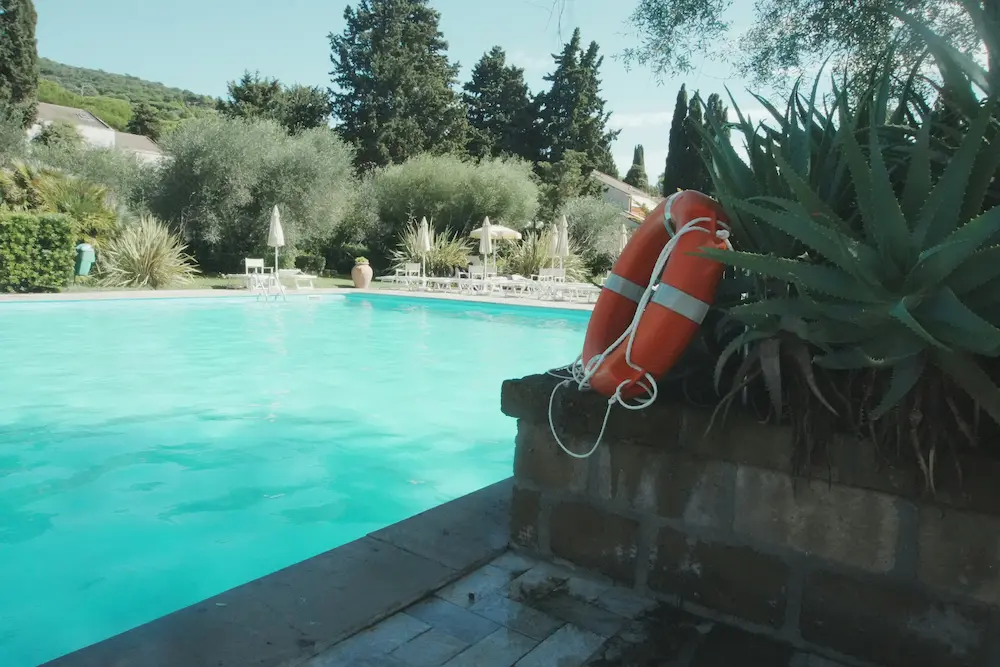
Few things give a family more pleasure than their own pool: early-morning lengths, long summer afternoons, children growing up genuinely at home in the water. But water asks something in return. Drowning is the leading cause of accidental death in young children in many countries, and it rarely looks like it does in films — there is usually no shouting and no splashing. It is fast, and it is silent.
The reassuring part is that serious incidents are overwhelmingly preventable, and not by any single precaution. The households that get this right think in layers: several independent safeguards, so that if one fails, others still stand between a child and the water. Below are the five layers we recommend to every family we coach.
1. Barriers and secure access
Your first layer keeps unsupervised children away from the water entirely. A compliant four-sided barrier that separates the pool from the house and garden is the gold standard — pools accessible directly from the home carry far higher risk. Specify self-closing, self-latching gates with the latch out of a child's reach, and check them monthly; a propped or sagging gate is no barrier at all.
Indoor and basement pools deserve the same discipline: a lockable door, not just a closed one. Where a powered safety cover is fitted, treat it as a genuine barrier only if it is rated to hold a child's weight and is actually closed between uses. Door and gate alarms add a valuable warning layer, particularly for toddlers, who are quick, curious and silent.
2. Constant, designated supervision
No barrier replaces a watching adult. When children are in or near the water, one adult should be the designated "water watcher" — not reading, not hosting, and not on a phone. It is a single, handed-over role, passed deliberately from one adult to the next so responsibility is never assumed and never dropped.
Most fatal incidents happen during a brief lapse in supervision — often when a capable adult simply believed someone else was watching.
For younger or weaker swimmers, supervision means being within arm's reach. Keep the headcount frequent and deliberate at gatherings, when the noise and number of adults can paradoxically make a lapse more likely, not less.
3. Teach the skill, early and properly
Swimming competence is a safeguard that travels with your child for life. Gentle water-confidence work can begin in infancy with a parent in the pool, building breath control and a calm relationship with water; you'll find our approach on the baby swimming page. Structured lessons typically begin around age three — see children's lessons — and progress at the child's own pace.
Competence matters for adults too. A nervous parent is a less effective supervisor and a poorer model; overcoming that is very achievable in the privacy of your own pool, as we cover under fear of water. A clear point worth holding onto: lessons reduce risk, but they never remove the need for barriers and supervision. A child who can swim a width can still get into difficulty.
4. Be ready for an emergency
The minutes after an incident decide its outcome, so prepare for them in advance. Every adult who may supervise should hold current CPR training and refresh it regularly — it is the single most valuable skill you can carry. Keep reach-and-throw rescue equipment and a charged phone at the poolside, display the property's address clearly for emergency callers, and agree a simple emergency plan that everyone, including guests and staff, understands.
5. The water and its surrounds
Finally, make the pool itself as forgiving as possible. Mark depth changes clearly and keep non-swimmers to shallow zones. Maintain compliant, well-fitted drain covers to remove any entrapment risk. Store chemicals locked away from children, and keep the surround uncluttered and non-slip. If you are building or renovating, these decisions are far cheaper to make on paper than to retrofit later.
The household water-safety checklist
- Four-sided barrier with a self-closing, self-latching gate — checked monthly
- Lockable access to indoor pools; rated safety cover closed between uses
- Door/gate alarms where young children are present
- A designated "water watcher" whenever children are near water
- Swimming lessons underway for every child — and nervous adults
- At least one CPR-trained adult on site, training kept current
- Reach-and-throw rescue aid and a phone at the poolside
- A written emergency plan known to family, guests and staff
- Clear depth markings, compliant drain covers, chemicals locked away
For households with staff
Where nannies, housekeepers or other staff may be on duty near the water, safety has to be a shared standard rather than a private assumption. Anyone who might supervise should be water-safety and CPR trained and briefed on the emergency plan. For families coordinating coaching and cover through a household manager, our notes for PAs and household managers set out how we work, and every SwimFitz coach is vetted to the standard described on our coaches page.
Treat the five layers as a system, review them at the start of every season, and the pool becomes what it should be: a source of confidence and pleasure for the whole family, year after year.
Frequently asked questions
At what age should a child learn to swim?
Water-confidence work can begin in infancy with a parent in the pool, and structured lessons typically from around age three. Competence is a safeguard — never a substitute for barriers and supervision.
Is a pool cover enough on its own?
No. A cover is one layer. Effective safety comes from several independent layers — barriers, supervision, swimming competence and emergency readiness — so no single failure is catastrophic.
Do household staff need water-safety training?
Yes. Anyone who may supervise children near water should hold current CPR and basic water-rescue training, and know the household emergency plan.
How quickly can a child become a confident swimmer?
It varies by age, temperament and frequency, but private one-to-one lessons progress markedly faster than group classes. An intensive block over a school holiday is often the quickest route to confidence.
More from The Journal

Outdoor Pools in a Heatwave
Keeping a private outdoor pool safe, clean and enjoyable when the temperature climbs.

Why Families Choose SwimFitz Over Marketplace Sites
Why families pick a vetted private swim service over Bark or Superprof — vetting, fit, safety and discretion.
The PA's Guide to Managing Private Swim Programmes
A working framework for PAs — vetting coaches, scheduling around travel, reporting progress.
Confidence in the water starts with lessons
Private, one-to-one coaching at your own pool — for babies, children and adults. A safer, calmer way to learn.
Request a Lesson → Explore Lessons