Home › The Journal › Children
The Journal · Children
Teaching a Child to Swim at Home: What Actually Works
Teaching a child to swim at home is less about drills than sequence: water confidence first, then breath, balance, recovery and only then propulsion — each built on the last. Here is the order that actually works, what to expect at each age, and where a parent's patience ends and a coach's eye begins.
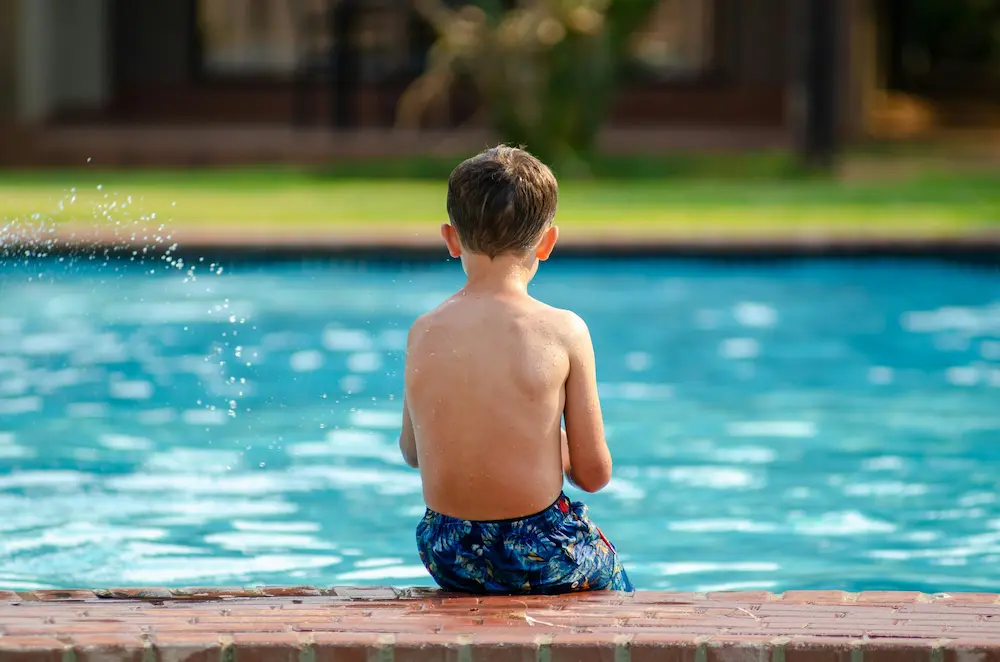
Every parent wants the same thing: a child who is safe, happy and genuinely at home in the water. What surprises most families is how little of that comes from teaching "strokes". A child who can splash an approximate front crawl but stiffens the moment water touches their face is not yet a swimmer. A child who is calm, can hold their breath, float, and recover to the side unaided — even with untidy technique — is far safer.
Teaching a child to swim at home works when you follow the sequence good coaches use, rather than rushing to the part that looks like swimming. Each stage rests on the one before it. Skip ahead, and you end up building technique on top of fear — which tends to resurface at exactly the wrong moment.
Start with water confidence, not strokes
The foundation is a calm relationship with water on the face, in the eyes and ears, and over the head. Begin in shallow water you can both stand in. Trickle water gently over the back of the head and down the face, turn blowing bubbles into a game, and let your child set the pace. The goal of these first sessions isn't a skill at all — it's the quiet message that water on the face is normal and nothing to fear. It's the same groundwork we lay in baby swimming, and it pays off for years.
The order that actually works
Once your child is comfortable, build the skills in this order — and resist the urge to jump ahead:
- Breath control. Blowing bubbles, then holding the breath and dipping briefly under. Everything downstream depends on this.
- Floating and balance. Front and back floats with your support, then gradually less of it, until your child can hold a relaxed shape alone.
- Recovery. Getting from a float or a submersion back to standing or to the wall, unaided. This is the single most important safety skill — teach it before propulsion, not after.
- Kicking. On a float or noodle first, then without — long legs, soft knees, splashes small.
- Arms and the first strokes. Only now does it start to look like swimming.
- Breathing on the move. Turning the head to the side to breathe — the part that takes longest and rewards the most patience.
What to expect, age by age
Treat these as rough guides, not deadlines — children arrive at each stage in their own time.
- Under 3: water confidence, breath, and supported floating, always with a parent in the pool.
- 3–5: independent floating, unaided recovery, and short distances. Structured lessons typically begin here — see our children's lessons.
- 5–7: combining kick and arms, breathing to the side, and swimming a full width.
- 7 and up: refining strokes, building stamina, and — just as important — sound judgement about water.
A child who can float, recover and breathe is safer than one who can thrash a fast, frightened crawl.
Make the home pool work for learning
The environment does half the teaching. Keep the water warm — children lose heat quickly, and a cold child tenses up and learns nothing. When you're teaching them yourself, favour short and frequent over long: fifteen or twenty minutes of parent-led play, several times a week, does more for a young child than a single exhausting marathon. A coached lesson is a different matter — in a focused forty-five to sixty minutes, a good coach manages warmth, rest and intensity, and gets far more done than a parent juggling their own child ever could. Use a shallow zone your child can stand in, remove distractions so one calm adult has their full attention, and invest in goggles that actually fit. Ill-fitting goggles cause more tears than the water ever does.
The mistakes that slow children down
Three habits hold families back more than any lack of talent. The first is rushing to strokes before breath and floating are secure. The second is leaning on armbands and inflatables: relied upon, they hold a child upright — the opposite of the flat, balanced shape swimming needs — and lend a confidence that vanishes the moment they come off. The third is pushing through fear, the well-meant "just put your face in." Force sets progress back further than patience ever could.
A home-teaching checklist
- Warm, shallow water you can both stand in
- Short, frequent parent-led practice — 15–20 minutes, several times a week
- Bubbles and breath-holding before anything else
- Front and back floats, then unaided recovery to the side
- Kicking on a float, then without
- Well-fitting goggles; no long-term reliance on armbands
- One calm adult — praise the effort, never force the face under
- A clear, unhurried sense of progress week to week
When to bring in a coach
There's a point where a parent's patience, however generous, meets the limit of a parent's eye. A coach notices the small things — a dropped hip, a held breath, a flinch before the face goes in — and adjusts in the moment, which is genuinely hard to do for your own child in your own pool. One-to-one lessons also progress far faster than stop-start family sessions; an intensive block over a school holiday, like our crash course, is often the quickest route from nervous to confident. If you'd like that taught in your own pool, our children's lessons are built for exactly this.
Teach the sequence, keep it warm, short and calm, and let confidence lead technique rather than the other way around. Do that, and you give your child something more valuable than a tidy stroke: the quiet, lifelong ease in water that keeps them safe — and lets them love it.
Frequently asked questions
What age should a child start learning to swim?
Gentle water-confidence work can begin in infancy with a parent in the pool, and structured lessons typically from around age three. Earlier is about comfort and breath, not technique — and it's never too late to start.
Are armbands and floats a good idea?
As a brief, occasional aid they're fine. Relied upon, they hold a child upright in a position that works against swimming, and lend a false confidence that disappears the moment they come off. Favour short bursts of supported floating, with the support fading quickly.
How often should we practise?
For parent-led practice, short and frequent beats long and occasional: fifteen to twenty minutes several times a week keeps momentum and avoids cold and tiredness. A coached lesson is different — a SwimFitz one-to-one runs forty-five to sixty minutes, where a trained coach paces the full session and keeps your child warm, engaged and progressing throughout.
My child is frightened of the water — what helps?
Slow right down and rebuild confidence with no pressure on the face, and never force it — many adults still carry a fear that began with a single bad push. The same calm method works at any age; we cover it under fear of water.
More from The Journal

Outdoor Pools in a Heatwave
Keeping a private outdoor pool safe, clean and enjoyable when the temperature climbs.

Why Families Choose SwimFitz Over Marketplace Sites
Why families pick a vetted private swim service over Bark or Superprof — vetting, fit, safety and discretion.
The PA's Guide to Managing Private Swim Programmes
A working framework for PAs — vetting coaches, scheduling around travel, reporting progress.
Confidence in the water starts with lessons
Private, one-to-one coaching at your own pool — for babies, children and adults across London, the Home Counties & beyond.
Request a Lesson → Explore Lessons