Home › The Journal › Home & Pool
The Journal · Home & Pool
Commissioning a Pool You'll Actually Swim In
A home pool is a rare and wonderful thing to build. But there is a real difference between a pool that photographs beautifully and one that teaches, trains and swims beautifully — and the gap is decided long before the first tile is laid. Here is the brief we wish every family had before they met their architect.
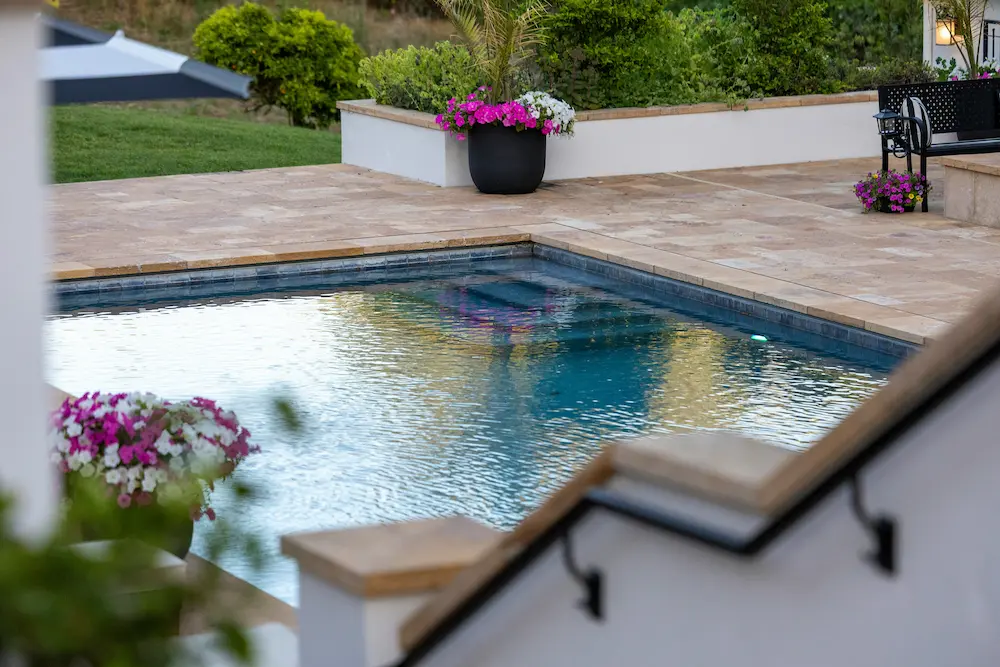
We coach in a great many private pools — indoor and outdoor, new-build basements and restored orangeries, lap tanks and swim-spas. And we notice something the brochures never mention: a pool can be exquisite to look at and quietly frustrating to use. The floor drops away too soon for a child to find their feet. The water sits at a brisk temperature that ends a toddler's lesson in tears. The lighting glares off the surface so a coach cannot see a swimmer's legs. None of these are cheap to fix once the concrete has cured.
The good news is that the decisions that matter most are decisions, not luxuries — they cost little more to get right on paper, and they transform how much the pool is loved and used. If you are building or renovating, this is the coach's-eye brief we would hand you before the first meeting with your architect or pool contractor.
1. Start with who will use it, and how
Before depth, shape or finish, answer one question honestly: what is this pool for? A pool built chiefly for young children learning to swim wants very different water from one built for a triathlete's dawn lengths, and different again from a pool that is really about entertaining on summer afternoons. Most family pools are asked to do all three, which is fine — but only if the design is told so from the outset.
Write down the real users and their real uses: lessons for the children, laps for a parent, gentle rehabilitation for a grandparent, play and parties, the occasional dinner beside the water. Every recommendation below flows from that list. A pool designed around a mood-board photograph pleases the eye once; a pool designed around its users pleases the family for twenty years.
2. Depth and the shallow end
If we could influence a single dimension, it would be this. The most valuable teaching water in any pool is a generous shallow zone where a small child can stand with their shoulders clear and an adult can stand comfortably beside them — roughly nine-tenths of a metre to about 1.2 metres. That standing depth is where confidence is built, where a nervous adult overcomes the fear of water, and where a coach can teach hands-free because the swimmer feels secure.
From there, a gently graduated floor into a deeper section gives you range — room to swim, to learn to dive safely, to train. What frustrates lessons is the fashionable uniform-depth tank: a beautiful rectangle at a constant 1.4 metres, out of a child's depth everywhere, with nowhere to pause and stand. If the plot only allows a small pool, protect the shallow end first and let the deep end be modest.
The shallow end is not the boring end. It is where every swimmer in your family will begin, and where the nervous ones will be won over.
3. Water temperature — the detail most people get wrong
Temperature quietly decides whether lessons work. A young child or a nervous beginner loses warmth quickly and, once cold, cannot relax or concentrate; the lesson is effectively over. For baby swimming and children's lessons, water around 30 to 32 degrees Celsius keeps a swimmer calm and comfortable enough to actually learn. Fitness swimmers, by contrast, want it a touch cooler so they don't overheat over a hard set.
You cannot pick one perfect number, so specify the ability to move between them: a responsive heating system, sized properly for the volume, and a good insulating cover to hold the heat overnight. The cover is where the economics live — most of a heated pool's energy is lost from an uncovered surface, so a quality automatic cover pays for itself and lets you keep the water genuinely warm without dread of the bill. If the pool is for the whole family, err warm and let the lap swimmer be briefly brave.
4. Size, shape and the endless-pool question
A great many wonderful home pools are not long. On a London plot, in a basement, or where the garden is precious, a compact pool with an adjustable counter-current — an endless pool or a well-specified swim-spa — gives a swimmer genuine, unlimited training in a fraction of the footprint. You swim continuously against a smooth flow of water; the pool need only be a little longer than you are tall.
The thing to scrutinise is the quality of the current, not the length of the box. A cheap jet produces a narrow, turbulent plume you fight rather than swim against; a good system delivers a wide, smooth, adjustable flow that a coach can use to teach real stroke technique for adults and triathletes alike. If you do have room for a true swimmable length, aim for a clean, unbroken lane; if you don't, a first-rate endless system is not a compromise so much as a different, and often better, tool.
5. Steps, entry and edges
How you get into the water matters more than it sounds. A gentle, graduated entry — steps with a handrail, or a shallow beach-style ramp — lets toddlers, older swimmers and anyone rebuilding strength enter with confidence rather than lowering themselves down a vertical ladder. A submerged rest ledge along one side gives beginners somewhere to perch and a coach somewhere to work from; it is one of the most quietly useful features a pool can have.
Around the water, specify a non-slip surround that stays kind to bare feet in the sun, and think about the edge detail: a deck-level (infinity or wet-edge) design is beautiful, while a traditional skimmer edge is simpler and can be easier to supervise children around. There is no single right answer — but decide it deliberately, with real swimmers in mind, not only the photograph.
6. Water quality and comfort
A pool a family swims in several times a week is a different animal from one used a handful of times a summer. For frequent use, consider a salt-chlorinated system: it still sanitises with chlorine, but generated gently and steadily, which many families find kinder to skin and eyes over a long lesson. Whatever the sanitiser, the unsung heroes are filtration and turnover — how quickly the whole volume of water passes through the filter. Generous, quiet, well-sized plant gives you clear, comfortable, low-odour water; undersized plant is a lifetime of chasing chemistry.
For any indoor pool, air handling is part of the water spec, not an afterthought. Proper dehumidification and ventilation protect both the swimmers' comfort and the building itself — an indoor pool without it becomes humid, heavy and hard on the fabric of the house.
7. Light and the indoor environment
Coaches read what is happening under the surface — a dropped elbow, a scissor kick, a held breath. That depends on being able to see into the water. Glare off the surface hides everything beneath it, so plan lighting and glazing to illuminate the water without dazzling: underwater lighting for evening use, and daylight brought in from angles that don't turn the surface into a mirror. It is a small design conversation that makes every future lesson better.
8. Safety, designed in rather than bolted on
Finally, the safeguards are always cheaper and more elegant on the drawing board than retrofitted later. Plan for a four-sided barrier that separates the pool from the house and garden, a rated safety cover, compliant drain covers that remove any entrapment risk, clear depth markings, and locked chemical storage away from children. These are not the enemy of a beautiful pool; designed in early, they disappear into it. Our complete guide to private pool safety sets out the layered approach in full — it is worth reading before you sign off the plans, not after.
The one-page brief to hand your architect
- A generous standing-depth shallow zone (about 0.9–1.2 m) for teaching and confidence
- A graduated floor into a modest deeper section — not a uniform deep tank
- Heating and a quality automatic cover that can hold 30–32°C for lessons
- A true swimmable lane, or a first-rate endless-pool current for a compact plot
- Gentle graduated entry (steps or beach ramp) with a handrail, plus a submerged rest ledge
- Non-slip, cool-to-the-foot surround and a deliberate edge detail
- Salt or gentle chlorination with generous, quiet filtration and turnover
- Glare-free lighting and glazing so a swimmer is visible under the surface
- Indoor pools: proper dehumidification and ventilation designed in
- Four-sided barrier, rated cover, compliant drain covers and locked chemical store
A pool that grows with the family
The pools our coaches love working in are rarely the most extravagant. They are the thoughtful ones — warm enough for a three-year-old's first lesson, shallow enough to stand and be brave in, clear enough to see technique, and safe by design. Get those decisions right and the pool becomes what every family hopes for: not a feature of the house, but a part of its life.
If a pool is in your plans, we are happy to advise from the coaching side before you build — the questions to ask, the depths and temperatures to specify — and to teach in it once it's filled. You can explore our private lessons, note our pool hire for the interim, or, if a household manager is coordinating the project, see how we work with PAs and household teams.
Frequently asked questions
What is the ideal depth for a family pool used for lessons?
A generous shallow zone where a young child can stand with shoulders clear and an adult can stand comfortably — roughly 0.9 to 1.2 metres — is the most valuable teaching water. A graduated floor into a deeper section then adds range for swimming and diving. A uniformly deep tank looks impressive but is hard to teach in.
What water temperature is best for lessons at home?
For lessons and young children, around 30 to 32°C keeps a swimmer calm and relaxed enough to learn. Fitness swimmers prefer it a little cooler. A responsive heating system and a good cover let you hold a warm temperature affordably and adjust to the day's use.
Is an endless pool or swim-spa enough for real training?
Yes. A well-specified endless pool or swim-spa with an adjustable current gives genuine technique and fitness training in a compact footprint, which suits many London townhouses and basements. The quality of the current matters more than the length of water.
Salt or chlorine for a home pool used often?
A salt-chlorinated pool is still chlorinated, but at a gentler, more stable level that is kinder to skin and eyes — worth considering for a family swimming several times a week. Whichever system you choose, filtration and turnover rate do more for comfort and clarity than the sanitiser alone.
More from The Journal
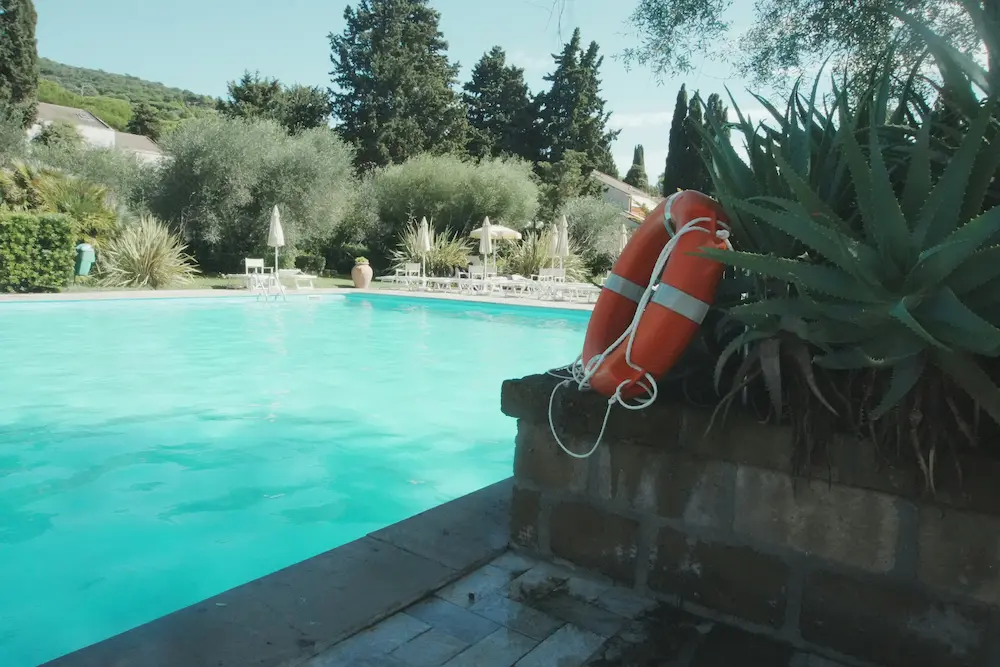
Private Pool Safety: A Complete Guide for Families
The layered safeguards every household with a private pool should have in place.

Outdoor Pools in a Heatwave
Keeping a private outdoor pool safe, clean and enjoyable when the temperature climbs.
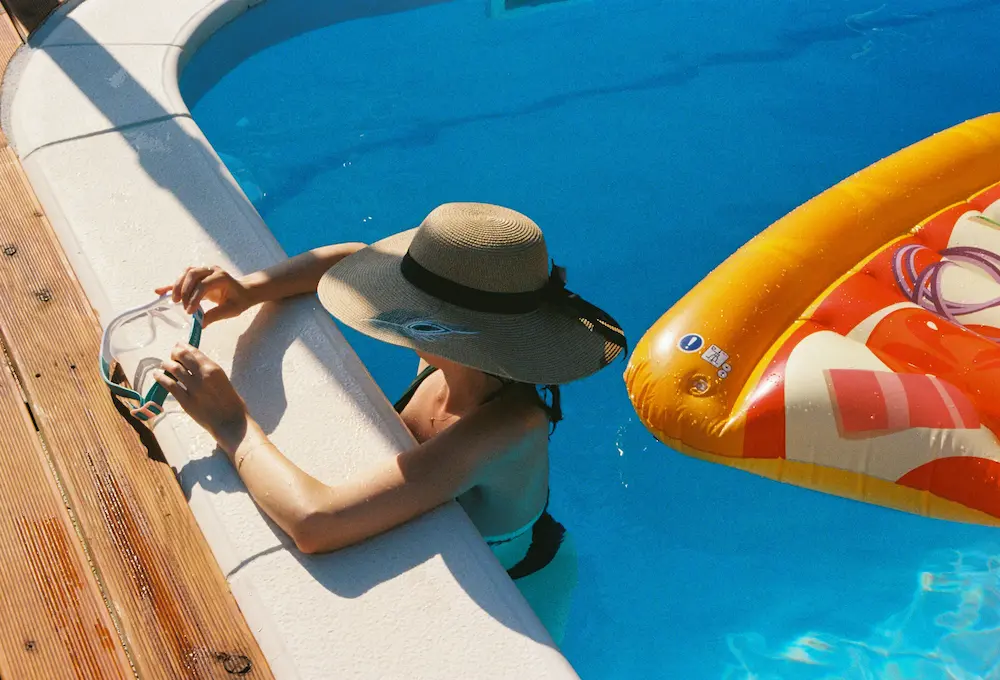
The PA's Guide to Managing Private Swim Programmes
A working framework for PAs — vetting coaches, scheduling around travel, reporting progress.
Planning a pool? Bring a coach into the conversation
Private, one-to-one coaching at your own pool — for babies, children and adults across London, the Home Counties & beyond. Ask us the questions worth asking before you build.
Request a Lesson → Explore Lessons