Home › Fear of Water
Nervous and Anxious Swimmers
Swimming Lessons
Without the Pressure.
Private one-to-one sessions at your home pool. No public changing rooms, no strangers watching, no group schedule to keep up with. Sessions run entirely at your pace, from wherever you are starting.
This Is More Common Than You Think
Fear of Water Affects
a Significant Number of Adults.
A meaningful proportion of adults in the UK either cannot swim or are significantly anxious in water. For many, a difficult experience in childhood — being pushed in, an unpleasant lesson, a near-miss — has shaped their relationship with water ever since. Others simply never had the opportunity to learn and the anxiety has built over time.
Group lessons in a public pool are the worst possible format for someone in this position. The noise, the strangers, the expectation to keep pace with a class, the exposure — every one of these factors amplifies anxiety rather than reducing it.
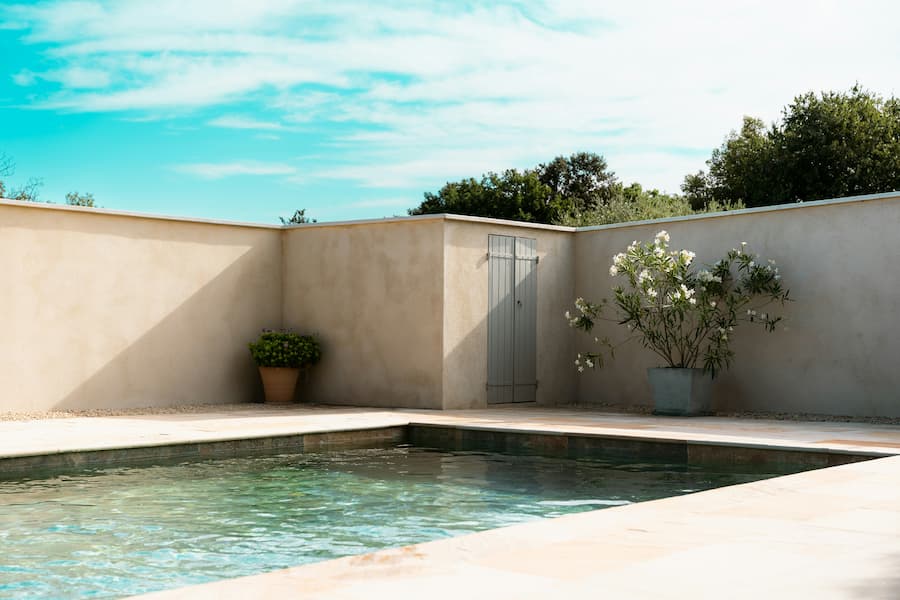
A private lesson at your own home pool removes all of them. Your coach arrives at your property. The pool is familiar. Nobody is watching. There is no class to hold up and no timeline to meet. This environment is materially different from anything a public leisure centre can offer, and it is why private home lessons produce results for anxious adults where group lessons have repeatedly failed.
What Sessions Cover
Working Through It
One Step at a Time.
First
Establishing Comfort at the Water's Edge
The first session begins wherever you are. For some clients this means sitting at the pool's edge. For others it means standing in shallow water. There is no minimum point of entry and no expectation about where the first session ends.
Foundation
Breath Control and Buoyancy
Understanding how to control breathing and experiencing natural buoyancy are the two foundations that replace anxiety with a sense of physical fact. Most clients find these early realisations — that the water will support them, that controlled breathing keeps them calm — are the turning point.
Safety
Water Safety Skills
Being able to recover in water — to float, to find the wall, to control panic — is a safety skill as much as a confidence one. We build these early because they are what allows clients to relax rather than brace against the water.
Progression
Movement and Propulsion
When the client is ready, we introduce basic movement: kicking, arm pulls, moving through the water. This stage is reached at a different point for every client. There is no set timeline for when it should happen.
Stroke
First Swimming Strokes
Completing a first full length is a significant moment for most clients with water anxiety. We work towards it methodically, without fixing a target date, and celebrate it when it happens rather than treating it as a baseline expectation.
Tracking
Progress Notes Every Session
Written notes after every lesson. Seeing your own progress in writing — what you could not do last week that you can do now — is one of the most effective tools for building confidence. Many clients are surprised by how much ground they have covered.
Simple Process
How It Works.
01 — Enquire
Tell Us Where You Are
No need to describe your fear in detail at this stage. Tell us your general situation, your pool details and your location. Everything else can wait for a conversation with your coach.
02 — Conversation
No Assumptions Made
Your coach will speak with you before the first session. We want to understand your specific experience with water — not to diagnose it, but to ensure the first session is appropriate for where you are starting.
03 — First Session
At Your Pool, At Your Pace
The first session has one objective: to end in a better position than it began. No milestones to hit, no strokes to complete. Your coach will determine the pace and content entirely based on how you are responding.
04 — Progress
Written Notes After Every Session
A record of what changed in each session. Progress with water anxiety is often faster than clients expect — and having it written down makes it easier to trust.
Water Confidence
Intensive.
Four sessions over ten to fourteen days. For adults who want to build water confidence quickly — before a holiday, before a specific event, or simply because weekly lessons have not produced the progress they need. The frequency of an intensive block is particularly effective for anxious adults, where the gap between weekly sessions can allow anxiety to reassert itself.
Session Count
4 Sessions
Delivered across ten to fourteen days. Closely-spaced sessions maintain the momentum that anxious adults lose when returning to the pool after a week. Progress compounds quickly once anxiety begins to reduce.
Perfect For
Specific Goals and Deadlines
A family holiday with a pool. An upcoming event near water. A long-standing goal that has not been reached through occasional lessons. The intensive block creates the conditions for genuine progress within a short period.
What Is Covered
Confidence First, Strokes Second
The programme follows the client's readiness, not a fixed curriculum. By the end of four sessions, most clients with water anxiety have moved significantly further than they expected — and have the written record to prove it.
Common Questions
Fear of Water
FAQs.
Is my fear of water unusual?
Will you force me to do anything I am not ready for?
I tried group lessons before and they made things worse. Is this different?
How quickly will I see progress?
What if I cannot get into the water in the first session?
Do I need to explain my fear before we start?
Take the First Step.
We Will Handle the Rest.
Private lessons at your home pool. London & Hertfordshire. No pressure, no timelines.